Fraud perpetrated in any contract can relieve the other party of the duty to perform.  In other words, fraud or making false statements is legally unacceptable.  Fraud includes any statement or act that is intended to deceive someone into entering into the contract.  Fraud consists of:

  • A Suggestion that something is true when in fact it is not
  • A positive statement that something is not true when the person making the statement had no reasonable basis for saying it
  • A person concealing something known to be the truth
  • A promise made without any intention of performing it
  • A person remaining silent when he had a duty to speak
  • Any other statement or action intended to deceive

Oklahoma has statutes defining actual fraud, 15 O.S. § 5859 that attorneys rely upon in defending against fraudulent insurance claims.

In Varn v. Maloney, 1973 OK 133, 516 P.2d 1328, the Oklahoma Supreme Court said the elements needed to prove fraud are:

  • A false representation 
  • made with the knowledge of its falsity or recklessly without knowledge as to its truth or falsity
  • as a positive assertion with the intention that it be acted upon by another 
  • actual reliance upon the statement 
  • injury or damage resulting therefrom.

Proving fraud in Oklahoma is not always easy to do and legal advice from an experienced attorney practicing in insurance litigation is usually needed.  The most common approach to dealing with fraud in insurance claims in Oklahoma is recission.
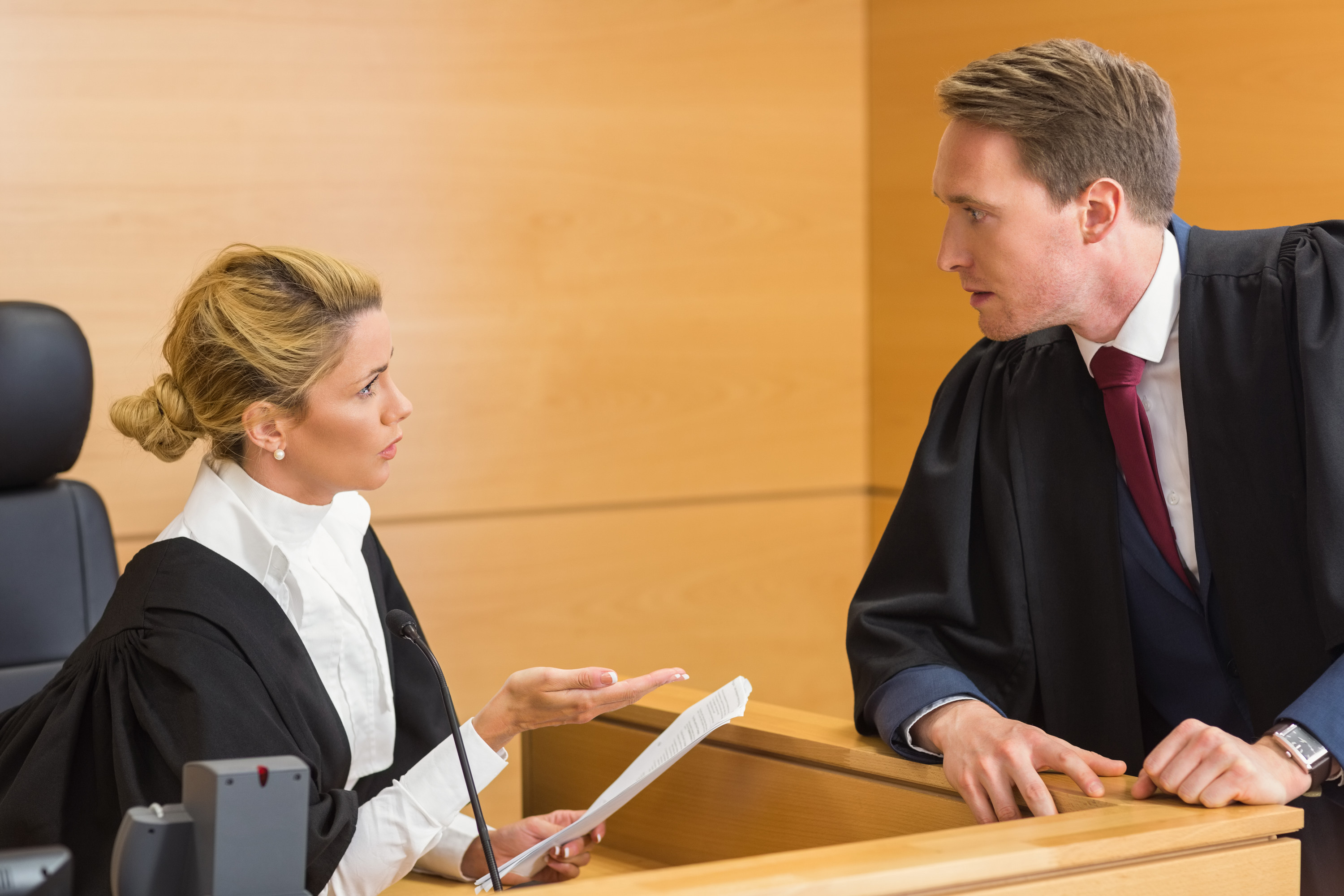
canstockphoto24485357In our last post, we discussed some rules the courts use to interpret insurance policies. If the contract has language that is subject to more than one interpretation, it is considered to be ambiguous. In Oklahoma when an insurance policy has ambiguous language, we explained the courts construe the language in favor of the insured or the policyholder and against the insurance company.

However, this still does not answer the question of how you decide what the language means. It is one thing to say the language should be viewed favorably to the policyholder, but you still have to determine what should happen.

Oklahoma has adopted the “reasonable expectations test”. In simple terms, it is what a reasonable insured would have expected at the time he was purchasing the coverage. An insured buying disability insurance that has a clause which is ambiguous would not reasonably expect to have collision coverage for his vehicle.

[ File # csp5148266, License # 3045690 ] Licensed through http://www.canstockphoto.com in accordance with the End User License Agreement (http://www.canstockphoto.com/legal.php) (c) Can Stock Photo Inc. / zimmytwsThe courts have used the “reasonable expectations test” as a means of protecting insurance companies from having their contract rewritten to the point where it would be unfair and unreasonable. The courts have made it extremely clear that it is not their job to rewrite an ambiguous insurance contract, it is merely their responsibility to interpret the language of the policy when the parties otherwise disagree.

It is no surprise there is often disagreement over whether an insurance policy provides coverage. There are competing interests to be accommodated and sometimes the language used is clearer to one person than another.

[ File # csp12476624, License # 3045623 ] Licensed through http://www.canstockphoto.com in accordance with the End User License Agreement (http://www.canstockphoto.com/legal.php) (c) Can Stock Photo Inc. / mybaitshop

We are often asked, “How do judges decide what the insurance policy really means?” There are volumes of books in law libraries discussing this very topic, but there are some general principles judges often employ.

  1. A judge is going to look at the whole contract to determine the intent of the parties. You do not just consider one part of the contract, but use all of the parts to interpret other provisions and try to figure out what was really intended.
  2. The courts generally examine the language of the policy to see what the parties meant by the words that were used. For instance, there may be definitions in the policy that tell the meaning of the words.  If not, then the courts usually interpret words in their ordinary and popular sense. Technical words are interpreted in the way that are usually understood by persons in that particular business unless they are clearly used in a different sense.
  3. If the terms are ambiguous or otherwise uncertain, those particular phrases are read in the way that is most favorable to the policy holder or the insured.  Lawyers tend to say the contract is construed against the drafter.  Since the insurance company came up with the language used; it will be read in the light most beneficial to the person insured.
  4. The courts are going to apply any regulations that the insurance department, statutes, or case law require.  For example, it would be against public policy to write an insurance policy that provided protection for committing criminal actions. In certain categories or classifications of insurance, there are required coverages which are mandated by the legislature.  Oklahoma has a statutory fire policy in which the essential elements of the coverage are set forth in the statute and this coverage is provided even if the policy says something different.  The insurance company can add to the minimum coverage, but cannot provide less than the minimum.

[ File # csp1277248, License # 3041684 ] Licensed through http://www.canstockphoto.com in accordance with the End User License Agreement (http://www.canstockphoto.com/legal.php) (c) Can Stock Photo Inc. / devon

Some people, including insurance adjusters, forget an insurance policy is a legally binding contract.  Claim representatives who adjust a lot of liability and third-party claims sometimes tend to confuse the issue of coverage under a policy with liability for the accident.  These issues are not related.

One reason insurance policies don’t seem like binding contracts is because the insurance policy is signed with a preprinted signature by an officer of the company. The policy holder or insured does not have to sign the agreement so it is not what people typically think of as a contract.

Another reason maybe that insurance policies are contracts the courts call “contracts of adhesion”. In other words, the terms of the agreement are usually not negotiated like a typical business deal. The insurance company drafts and prepares the policy and the insured either buys the coverage or does not.

Regardless of whether people think of insurance polices as contracts, courts consider them valid and binding to the extent the agreement does not violate regulations of the insurance department, statutes of the jurisdiction where the policy is issued, and controlling case law interpreting insurance policies. As such, the first step in trying to decide whether there is coverage for any given situation is to read the policy.

Bubba came to the office last week without an appointment. He was hotter than a firecracker on the 4th of July. He was ranting about wanting to sue his insurance company for “bad fate” and that I could have all of the money from the lawsuit. He said I could put it all in that fancy bank where all the rich lawyers keep their money. After about 15 minutes of non-stop babbling, I got up and started walking out of the office. Bubba said, “Heh! Where ya goin’?” I said, “Bubba, I don’t have a clue as to what you’re talking about and I am getting some aspirin for a headache that just started.” He uttered a few more graphic descriptions about what he planned to do to the poor field adjuster and then blurted out “You can just ask Aunt Pudge!” So I picked up the phone and called Pudge.

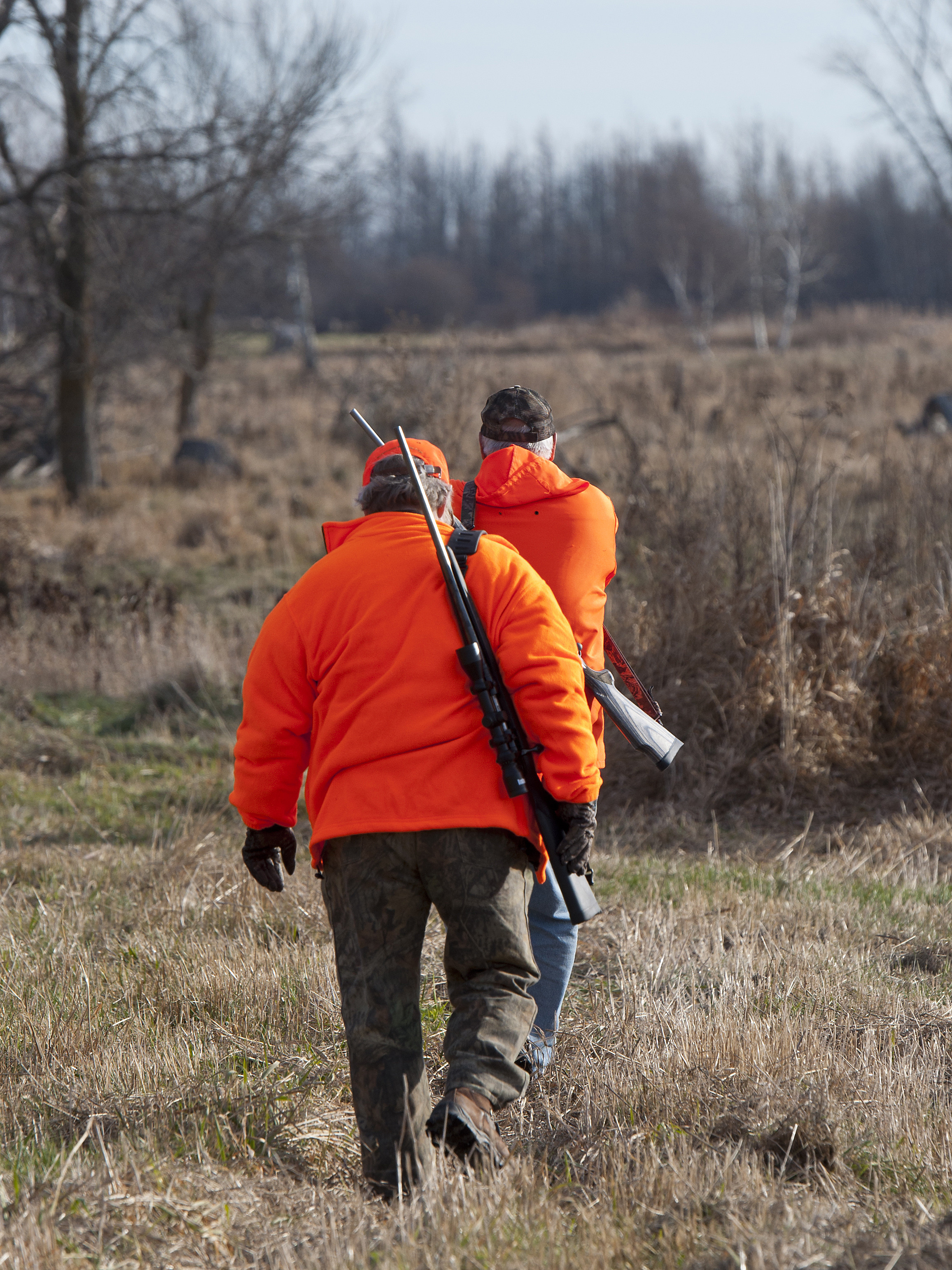
HuntersOn the second day of deer season, Pudge was in her kitchen [she always gets her limit on opening morning]. She has a direct view of Bubba’s mobile home from there. She told me that two Rambos [city people who come out during gun season armed to the teeth but who can’t tell a deer from a Hereford cow] were walking by when a squirrel ran across the top of Bubba’s roof. Both of these Rambos started shooting at the squirrel and one of them actually managed to nick the squirrel’s hind leg. The squirrel went “bonkers” and ran down the stove pipe into the wood stove that Bubba had set up in his living room.

Pudge didn’t actually see the squirrel run down the stove pipe. She learned about that later on. When they started shooting, she went to get her own gun to let those Rambos know how she felt about trespassers hunting near her house. Pudge used to work for the Oklahoma Department of Corrections (penitentiary) as a sharp shooter. The Rambos quickly realized they were out-gunned and out-numbered as they stumbled and tripped over one another trying to “get out of Dodge.” Since Pudge didn’t see the squirrel go down the stove pipe, she didn’t realize that Bubba’s mobile home was about to burn down.

It’s speculation at this point, but Pudge thinks the squirrel’s tail must have caught on fire as it came out the door of the wood stove and started the fire running around inside. After the hunters left, she went to her den to clean her gun and watch video tapes of her favorite TV show, Cops. The fire was well on its way by the time she noticed it.

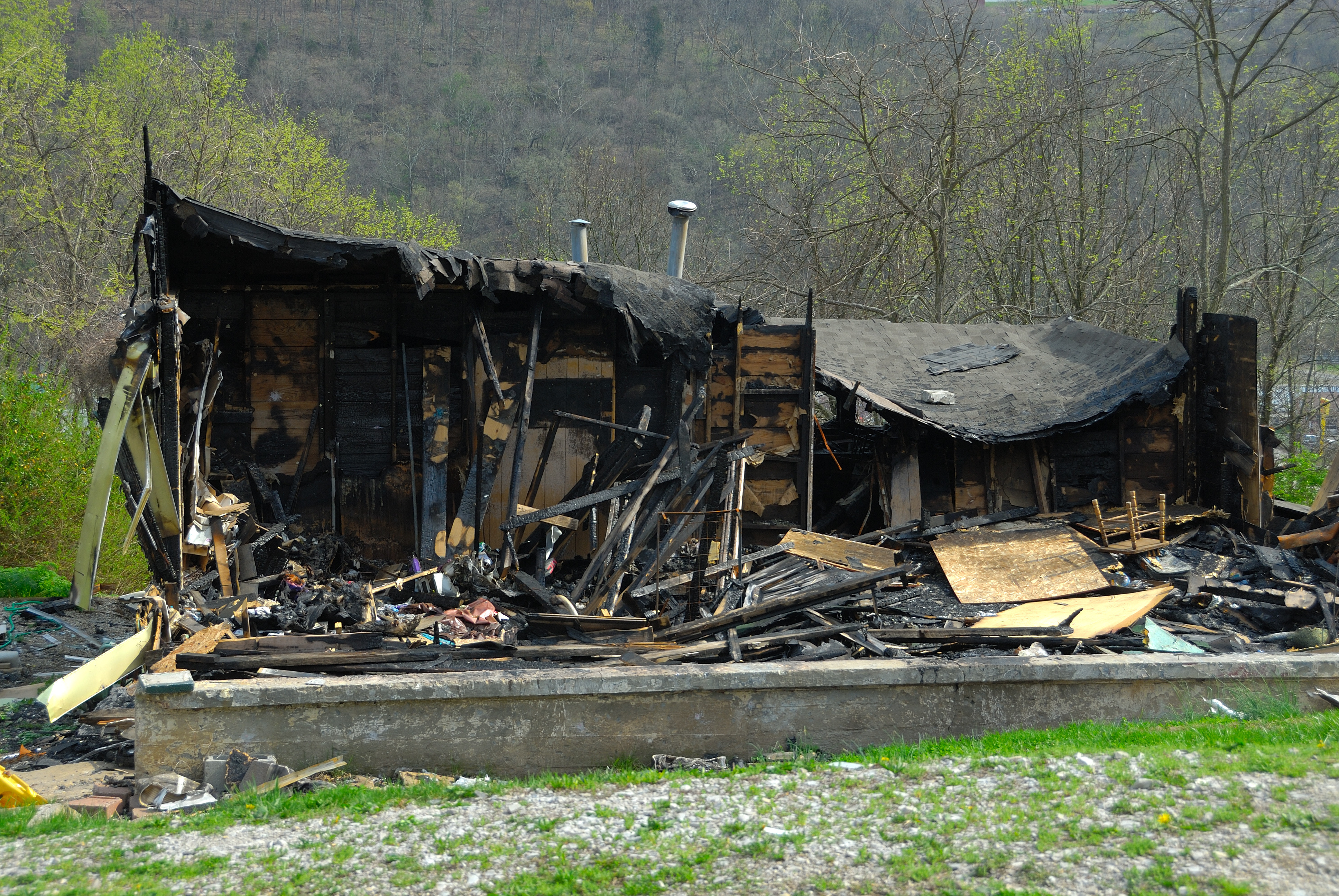
The way they figured out the squirrel’s tail caught fire was that Bubba went looking through the debris to see what could be salvaged.canstockphoto598720 He went to the bathroom to find out how many of his Field and Stream magazines had been destroyed (he keeps them right there by the toilet) when he discovered a squirrel sitting in his toilet. The squirrel didn’t have a tail and apparently had crawled into the water to survive. One good look at Bubba, and he hasn’t been seen since.

During the investigation, the adjuster discovered that title to the mobile home was not in Bubba’s name. The mobile home had originally been purchased by Bull, an ex-brother-in-law of Bubba (that really does resemble some bulls I’ve seen). Bull sold it to one of Bubba’s cousins, Jim Bob, for $100 cash, a .22 rifle, and Jim Bob taking over the payments. Several months later Jim Bob got into financial trouble and couldn’t make the payments, he sold it to Bubba for a bottle of Jack Daniels, a bird dog and Bubba taking over the payments. The adjuster reported this ownership situation to the insurance company.

Now things were starting to make a little more sense, Bubba had been mumbling the adjuster said he didn’t have “no insurance interest.”  In the same breath he kept ranting about having paid his ridiculously high premiums and how they had “rooked” him out of $27.36 a month. He was saying “insurance interest” instead of “insurable interest.”  So I could get Bubba out of my office to look into things a little further, I promised to “poke out the adjuster’s eyes and rip his tongue out of his throat” when I put him on the witness stand at trial. Bubba smiled with his famous toothless grin and said he would check back later.

I started to work right away because I knew Bubba would be calling me every two to three hours to “see how things were going.”  The adjuster, a very pleasant and likeable guy, told me about his investigation and the company’s decision to deny the loss for lack of insurable interest.

I asked him if they had considered Gray v. Republic Underwriters Ins. Co., 1995 OK 118, 909 P.2d 776. It was a fire loss case decided by the Oklahoma Supreme Court.

In Gray, a mother secured insurance from Republic, a fire insurer, for property that she did not hold actual legal title but that she paid taxes on, advanced money for its improvement, and had made an oral agreement with her son for repayment of the money she was spending. She thought the property was security for her son’s promise to reimburse her. Gray testified that she told her agent about the title being in her son’s name when she bought the insurance. The property was destroyed by fire. The claim was denied because legal title was in her son’s name and she did not have an insurable interest in the property. The trial court granted a summary judgment in favor of the insurer and the Oklahoma Supreme Court reversed. The Court stated:

Before summary disposition of this case could be effected, the trial judge was duty-bound to ascertain — from the evidentiary material before him — that as a matter of law Gray … did not and could not demonstrate she would gain some economic advantage by the insured property’s continued existence or, in the alternative, that she . . . did not suffer some economic detriment from its loss or destruction. The law’s “factual expectation” standard, adopted in Snethen, is today the Oklahoma test for use in ascertaining a person’s insurable interest. Equating insurable interest with a legally cognizable estate is no longer sanctioned by our jurisprudence.

Insurable interest is defined by statute as, “any actual, lawful, and substantial economic interest in the safety or preservation of the subject of the insurance free from loss, destruction, or pecuniary damage or impairment.” 36 O. S. Section 3605 (B). In other words, almost any interest that one can imagine can become insurable.

In Conti v. Republic Underwriters Insurance Company, 1989 OK 128, 782 P.2d 1357, the Oklahoma Supreme Court also addressed insurable interest. The facts in Conti were that the residence was purchased with a Contract for Deed in the name of Conti’s father. The entire family considered Conti to be the owner even though the title was in his father’s name. The father contacted the agent and requested that insurance be purchased in the son’s name as owner and the premiums were paid by the father. The house was destroyed by fire. After trial the case was appealed to our Supreme Court.

In discussing the issue, the Court stated:

It is an accepted fact that the appellee had undisputed possession of the property. Nor is there any question that the appellee enjoyed beneficial ownership, or that he had equitable title by virtue of his contributions and the intent expressed by all parties to the original transaction. It has long been recognized in Oklahoma that an insurer may not escape its contractual obligation to one who has equitable title, beneficial ownership and undisputed possession of property, even though bare legal title rests in another. See: Pease v. Traveler’s Fire Insurance Company, 185 Okl. 421, 93 P.2d 536, 538 (1939).

I have to figure out a way to keep Bubba busy while the company has a chance to take a closer look at the law.

The lack of income due to Bubba‘s injuries was devastating. He couldn’t make his mortgage payment and had to move from his home in Wewoka, Oklahoma. When the big day came, Bubba pulled into the yard in his Ford 4×4, and rigged up a homemade hitch to “hook up” his mobile home so that he could pull it down the road to the new homeplace (behind Aunt Pudge’s house just outside of Wetumka). It’s a long way from Wewoka to Wetumka, particularly if you have to go through Weleetka (the mobile home won’t fit across the single lane bridge if you go the short way). During the trip, Bubba decided to stop at Weleetka to use the facilities and “leetka.” I have to point out that Bubba’s pretty health conscious and he realized pretty quickly that he had just drained out all of his bodily fluids and needed to replace and replenish his system. Fortunately for Bubba, he had stopped just across the road from the High and Dry Bar and Saloon that has some of the cheapest beer in the whole county. Bubba went in and fully replaced his bodily fluids with a few pitchers of beer, then started back down the road to his new homeplace in Wetumka.

On the way, Bubba met a little old lady on her way to bury her pet canary. She was driving down the road in her big yellow Oldsmobile, wiping the tears from her eyes and blowing her nose. In her grief, she veered across the center line and almost hit Bubba head on. The one thing about Bubba, even when he’s had a few pitchers of beer, he’s still got good reaction time. He swerved to the shoulder of the road and missed the little old lady, but jackknifed his Ford 4×4 and the mobile home in the process. The mobile home spun around and slid through the ditch right up into Moses Brown’s pasture. As it slid through the fence, Moses’ prize bull was standing right where he could watch the whole thing! The washing machine came flying out the front door of the mobile home and hit him right between the eyes and killed him.

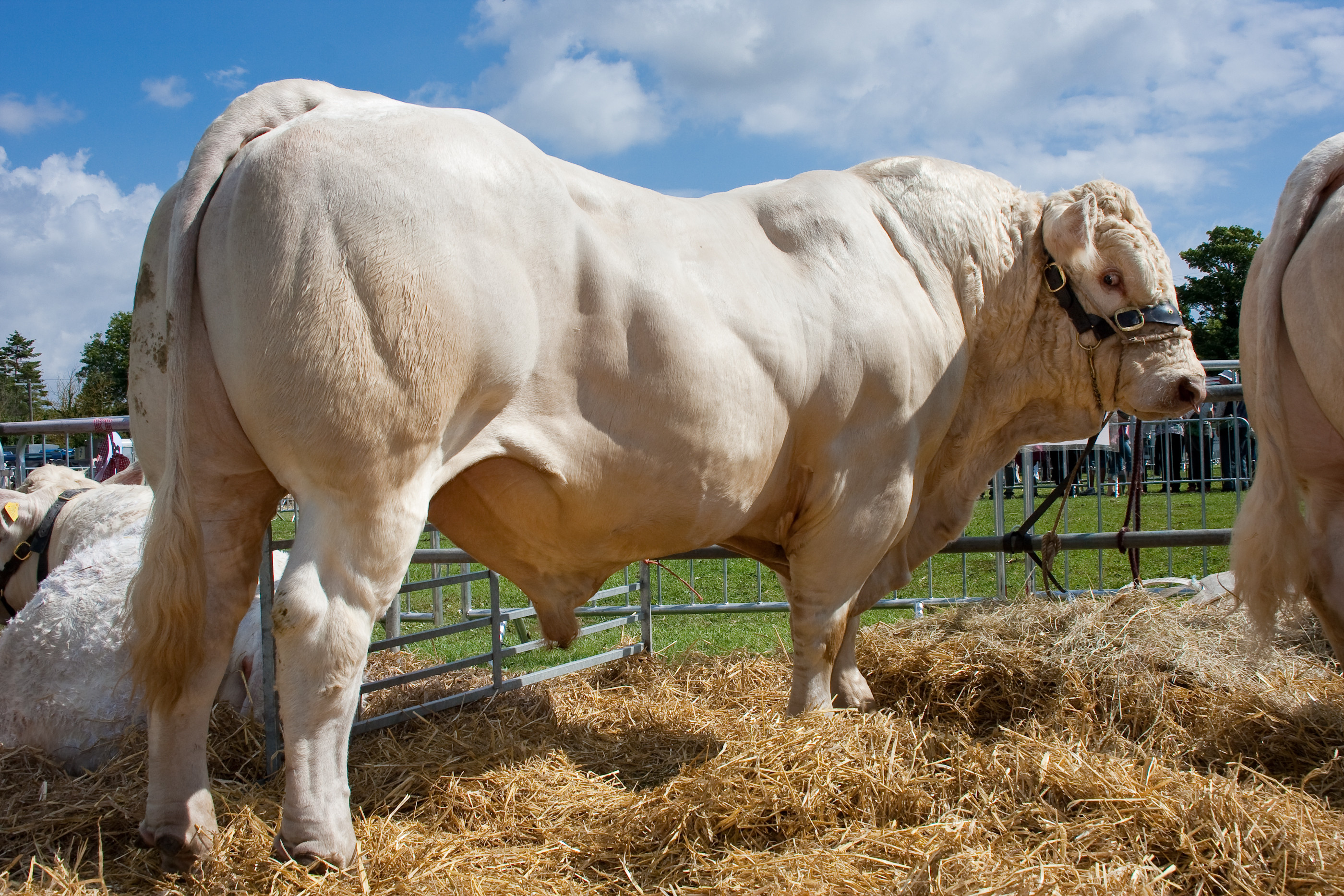
bullMoses Brown’s claim could have been settled for a whole lot less if it had been one of his kids instead of his prize bull. The bull had been in the family for years and was the only bull he had. He has eight kids! Moses decided that he was going to get every last dime for the emotional distress associated with having to butcher and eat a member of the family. He was so mad he sued both Bubba and the High and Dry Bar and Saloon.

The High and Dry Bar and Saloon hired a smart independent adjuster who quickly settled with Moses and obtained a General Release without even having to file an Answer to the suit. The Release specifically named the High and Dry Bar and Saloon and “any and all others who might be responsible including their agents, successors, personal representatives, assigns, partners, corporations, and all others. . . .” Moses Brown went ahead with the suit against Bubba. After hearing about Bubba’s fluid replenishment, Bubba’s insurer, Wewoka’s Worldwide Insurance, decided the only way to defend the claim was based upon the language of “all others” in the General Release Moses Brown gave the bar. Wewoka Worldwide turned down Bubba’s offer to re-create the accident on video to show how quickly he reacted.

Since our office doesn’t do any work for Wewoka Worldwide Insurance, I always make sure that Bubba buys his insurance from a Wewoka Worldwide agent. It seems like the least I can do for insurers that send us their business.  Wewoka Worldwide hopes the General Release to the High and Dry Bar and Saloon also released Bubba from any liability. I don’t think that they are going to have much success with that argument.

In, Cotner v. Cessna Aircraft Co., 1995 OK 95, 903 P.2d 878, the Oklahoma Court of Appeals repeated the Supreme Court’s answer about whether a General Release with broad boiler-plate language releases all parties. The Court held that a General Release signed by an injured party which contains the names of the person to be released along with general broad language which purports to release the entire world from any and all claims will not discharge liability from those potential tortfeasors that are not specifically named in the Release.

The Court’s decision is consistent with the statute concerning contribution by joint tortfeasors (Bubba thinks “tortfeasor” is a funny word!) found at 12 O.S. § 832(H):

When a release, covenant not to sue, or a similar agreement is given in good faith to one of two or more persons liable in tort for the same injury or the same wrongful death:

  1. It does not discharge any other tortfeasor from liability for the injury or wrongful death unless the other tortfeasor is specifically named; but it reduces the claims against others to the extent of any amount stipulated by the release or the covenant, or in the amount of the consideration paid for it, whichever is greater; and
  2. It discharges the tortfeasor to whom it is given from all liability for contribution to any other tortfeasor.

The truth is Cousin Bubba doesn’t really know a lot about insurance or even law for that matter. He is well versed in the 2nd Amendment and will “tell you right flat out the right to bear arms has nothing to do with the First Lady’s sleeveless dresses.” Bubba doesn’t need to tell you he’s a card carrying NRA member; he proudly displays the bumper sticker on his pickup truck.

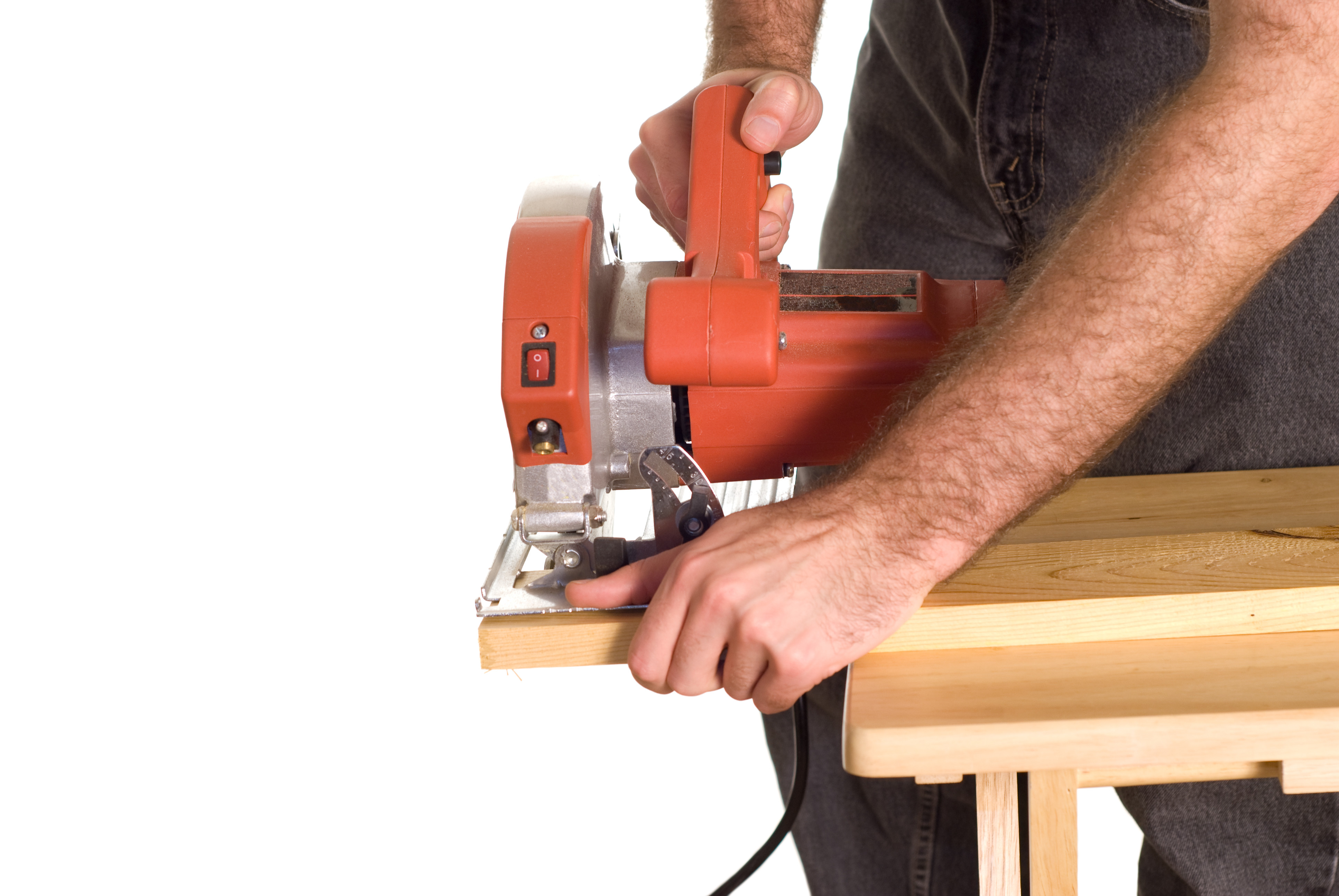
Times are tough for guys like Bubba right now with the economy slowing down. Not long ago, Bubba needed a little extra money for new tires on his truck. He went to work for his brother-in-law, Buddy. Now Buddy is a General Contractor and works all of Seminole County from one side to the other. Buddy had contracted to build a barn (storage shed for you city folks) and needed Bubba to help cut some of the rafters. bubba sawBubba, who has used a skill saw ever since he could look a coon hound in the eye, began cutting the boards by laying one end across his leg and the other end on the tailgate of Buddy’s truck. As he was cutting on the line that Buddy had marked, one of those Oklahoma gusts of wind blew through and the end of the board came off the tailgate. The skill saw was placed in a bind and the saw blade came out of the wood. It cut off part of one of Bubba’s fingers.

Bubba knew when he went to work for Buddy that there wasn’t any workers’ compensation coverage through Buddy’s company. Although the company has been growing and expanding for years (sometimes as many as four in the crew if you count Buddy’s 7 year old), he has never been able to afford workers’ comp insurance. But, Bubba knew Old Man Jones, who was having the barn built, had insurance on his house. So Bubba simply filed a “workers’ comp” claim against Old Man Jones’ homeowners’ policy to recover for his injuries and his time off work.

I was talking to Bubba about all that had happened and he told me that the homeowners insurance company hired some slick, smooth-talking lawyer who got his case dismissed. canstockphoto18593860He couldn’t remember the lawyer’s name, but still had a copy of the motion that he filed. There is an exclusion in 85 O.S. § 11 (3) which states that where work is performed on a single family residence, dwelling, or premises occupied by the owner … such owner . . . shall not be liable for compensation under the workers’ compensation act.  Bubba didn’t get his claim paid by the homeowners’ policy.  He couldn’t buy his new tires because Buddy wouldn’t pay him “cause he ruint a perfectly good piece of lumber!”