Fire

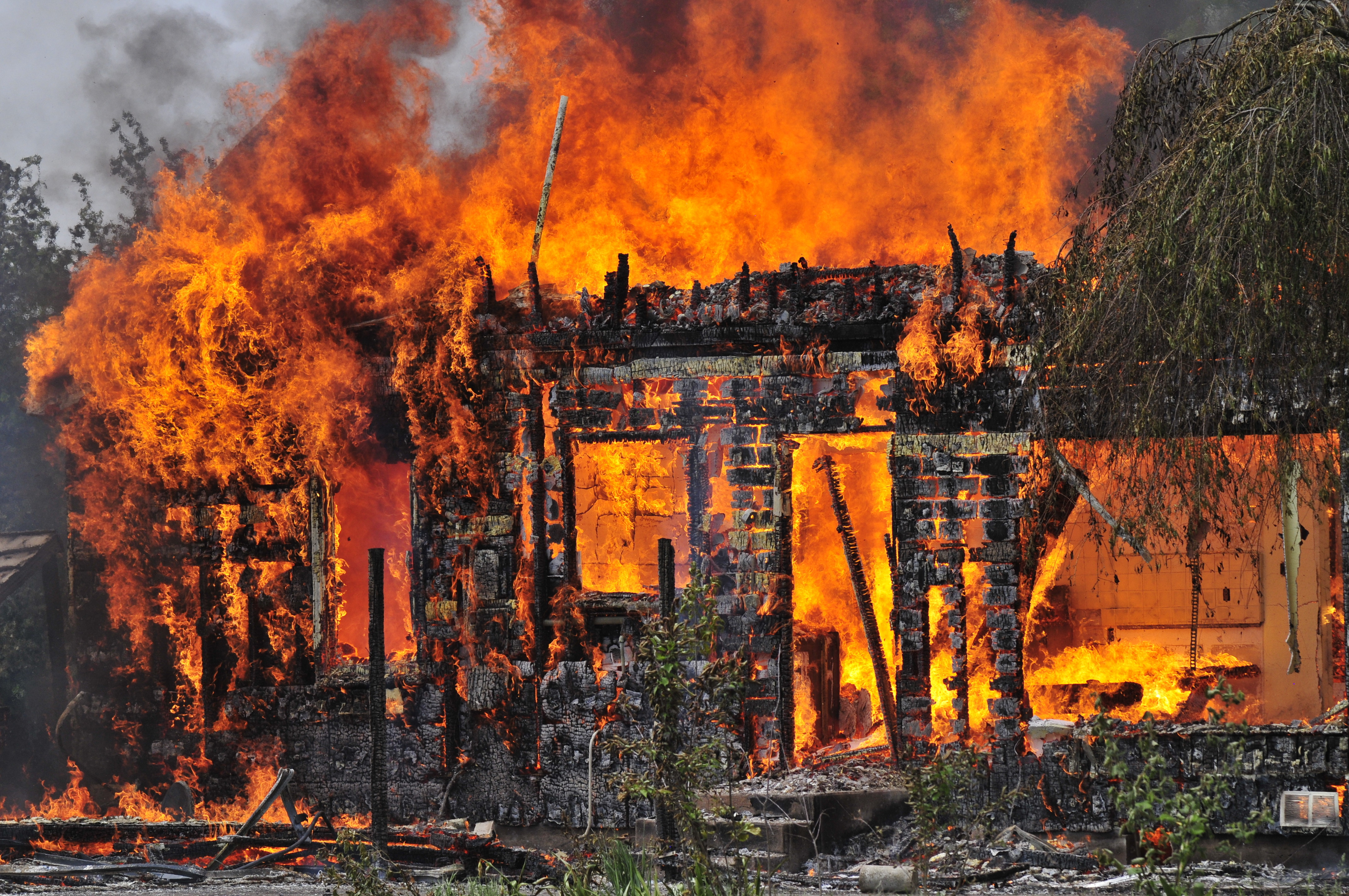
Insurance is intended to protect the insurance company customer (“insured”) from fire damage. The policy holder pays the premium for fire insurance. If the property catches fire, the insurance pays for the losses. Obviously, the customer cannot commit arson. Intentionally burning your house or property is a crime. It is also illegal to present a fraudulent insurance claim. No law abiding citizen approves of either arson or insurance fraud.

According to Allstate, fires cause serious damage. The insurer reports the number of fires in this country destroy homes and lives:

Your house is probably the most valuable asset you have, and you have homeowners insurance to help protect you and your house in case something unfortunate, such as a fire, should happen. From electrical issues to candle mishaps, the National Fire Protection association reports an average of 357,000 residential fires each year.

Since homes are usually the most expensive asset owned, people understand the need to buy insurance coverage. Banks typically require an insurance policy for the loan. The mortgage is still owed even if the house burns down. Realizing the average family would not be able to pay off the loan, insurance is required by lenders.

The typical Allstate Insurance policy provides coverage for the house. The insurance for the house is called dwelling coverage:

Dwelling coverage, sometimes called “dwelling insurance,” is the part of your homeowners insurance policy that helps to pay for the rebuilding or the repair of the physical structure of your home if it’s damaged by a covered hazard. As you probably already know, there are a number of hazards that are not covered by many homeowners insurance policies. But, the good news is that the average homeowners insurance policy typically provides coverage for a pretty comprehensive list of potential incidents, both natural and manmade.

The part of the insurance that protects the stuff inside the home is called contents coverage. Like most insurance companies, Allstate’s policy covers personal belongings:

Homeowners coverage usually extends to your personal belongings, such as appliances, furniture and clothing. Homeowners insurance typically helps protect personal belongings, from specific risks (described in most policies as “perils”), such as fire and lightning strikes. If your belongings are damaged or destroyed in a fire, homeowners insurance may help cover the loss.

A standard homeowners’ policy sometimes insures trees and bushes in the event of a fire. The homeowner can be reimbursed for some or all of their value if destroyed in a fire. Compared to human life, the cost to replace some trees is not significant. But, many homes have thousands of dollars invested in landscaping that fire destroys.

Is there enough coverage? The question is asked often. When someone asks about the amount of coverage before a fire, it is considered good judgment. The question of “am I covered” also comes up after a fire. The normal property owner usually doesn’t know what coverage they have. Finding out after a fire can be painful.

Insurance policies have limits or maximums. Some folks just assume they have “full coverage”. After the fire claim is reported, they find out differently. The policy has exclusions, ceilings, and doesn’t cover everything. Most insurance policies have maximum amounts set for guns, jewelry, glass or crystal, furs, and other things. Computer and electronic equipment usually have limits of coverage.

Fire claims are different from storm losses. A tornado is hard to fake. On the other hand, fires can be started intentionally. Insurance adjusters look for signs of fraud or arson. The adjuster has two jobs in a fire claim. The adjuster protects the insurance company against fraud. The adjuster pays an innocent customer for the damage from the fire. Simple enough, right?

Circumstances can raise “red flags” with experienced adjusters. A “red flag” is something out of the ordinary. It can be an indication that insurance fraud is present. For example, being behind on the monthly bills is a red flag in some cases. The facts have to be looked at. A person with past due bills might have a reason to burn their house. The adjuster needs to be fair in assessing the facts. Many people have financial problems from time to time. Just being unable to pay bills doesn’t prove arson. However, being behind on payments can suggest a motive.

If the property owner is 3 – 4 months past due with the bank, it may indicate a reason for setting the fire. A home with a lot of equity presents an interesting question for a claim representative. The adjuster has to decide, did the customer burn the home to get the money back? A home with no equity raises a different question. Was the house burned because it could not be sold?

The biggest mistake made in fire claims is not getting an attorney involved early. Smart insurance companies retain a competent insurance lawyer early in the claim. It can be helpful in some claims for the homeowner to have a lawyer. But, not a brother-in-law whose law practice is largely divorce cases. The insured needs experienced legal counsel just like the insurance company. If the insured doesn’t trust the insurance company, an experienced attorney can confirm that a settlement is fair.

If the insured homeowner chooses not to consult with an attorney, good communication becomes very important. Homeowners may not understand the process of adjusting a claim. Insureds may express frustration over the need to document the actual damages. It is important to remember the policyholder is understandably upset by the fire. A legitimate claim for loss of everything you own is a huge blow. Good communication keeps everyone working together to resolve and settle the claim quickly.

Our legal team is licensed in all Oklahoma State and Federal courts. We have decades of experience in insurance, fire claims, construction litigation, insurance coverage, examinations under oath, and settling insurance claims. If we can help you, call us 918-587-1525.

Motorcycle

The debate over the safety of wearing a helmet while riding a motorcycle isn’t new. Some bikers assert the right to their personal freedom and choice in the matter. Safety proponents have lobbied the Oklahoma legislature for decades over the issue. Setting aside the personal rights versus the safety issue, what’s the rule in accident cases?

Suppose a motorcycle rider is injured while riding a bike without a helmet. Can the lack of a helmet be offered into evidence as contributing to the injuries? Oklahoma defense attorneys recognize that challenging the cause of the injury helps the defense. In defending the driver of the car involved, a good defense attorney will argue about the cause of the injuries. The insurance company for the car doesn’t want to pay for damages not caused by the insured.

In Oklahoma courts, some types of evidence cannot be used. This is true in other states also. The courts have the final say on what evidence the jury will hear. Some evidence is not relevant. Other evidence is more harmful than really helpful. Judges make rulings on the admissibility at trial. The rulings determine what evidence the jury will hear.

In Johnson v. Stacy, 2016 OK CIV APP 56, Johnson was riding his bike in Tulsa on a road with road construction. James Stacy pulled out from a private driveway in front of the motorcycle. It created an emergency for the biker. He laid the bike down to avoid colliding with the car. The facts varied with the witnesses giving different accounts. The defense raised the lack of a helmet as a defense. The attorney for the biker argued the evidence should not be admitted.

The Oklahoma Court of Appeals ruled:

Unlike the law related to the use of seatbelts, no rules apparently have been established by the Oklahoma Legislature or pursuant to common law regarding the introduction of evidence of use or nonuse of a motorcycle helmet. This question appears to have a public policy dimension, and the only statement we have from the Legislature on this matter is its repeal of the law requiring helmet use. Courts in other jurisdictions are split on the issue of whether evidence of helmet nonuse is admissible. A substantial number prohibit the introduction of such evidence.1 A number of other jurisdictions allow such evidence in damages questions for the limited purpose of allowing testimony that injury to the head area could have been reduced by helmet use.

Johnston v. Stacy, 2016 OK CIV APP 56, ____ P.3d ____.

In Oklahoma, the refusal to wear a helmet probably will not be information considered by the jury. Arguments can be made both ways as seen by the split in the courts across the country. Oklahoma defense attorneys will continue to raise the issues in motorcycle accident litigation.

Fire2

Insurance claims can be expected from apartment building fires. When an apartment complex is faced with a fire, the consequences can be severe. The damages affect the tenants in the units, the complex owner, the property manager, and the insurance companies that provide coverage for the fire damage.

In a recent fire in Tulsa,

“Captain Jarrod Perry said a call came in around 8 p.m. Thursday about the fire at the Sunset Court Apartments.

Perry said when the first crew arrived it saw heavy smoke and fire coming from the second floor. He said crews went in and knocked the fire down, but flames continued to the third floor.

A second alarm was called and two additional companies and a ladder truck responded to the scene.

Perry said the fire was eventually contained. He said the second, third floors and parts of the attic were impacted.

He said at least two units received heavy fire and smoke damage.

No one was injured, but Perry said at least four cats were rescued.”

A fire to a commercial building, residential or office, has consequences. Fortunately, no one was injured or killed in the fire. In some claims, the death of the tenant or someone visiting the premises results in a wrongful death claim. The family of the deceased decides to pursue the responsible party including the building owner or property manager.

In fires with only property losses, there can be a number of types of insurance coverage that comes into play. Renters insurance comes to mind for the tenants that occupied the space. Some landlords have begun to require the tenants to carry this coverage. If a renters insurance policy was purchased, then the tenant’s belongings may be covered.

The apartment building owner most likely has property insurance. The insurance policy probably only has coverage for the building and possibly personal property of the apartment complex. It is doubtful any coverage will be present for the tenants. Of course one exception to this general statement is negligence by the landlord.

If the landlord or its staff were negligent, there might be liability coverage that would be available for the property of the tenants. The purpose of CGL insurance policies is to protect the business from claims of neglect. Most of these types of insurance policies would arguably extend coverage for damage from a fire caused by the negligence of the property owner.

Depending on the cause of the fire, other insurance policies might be involved. If a subcontractor did something to accidentally cause the fire, the liability coverage may be called to pay for the damages. For example, in a completely different fire, a painter left rags in the corner. The rags soaked with lacquer thinner caught fire. The argument became the painter was responsible. Claims were made by several parties against the painter for the fire. The painter’s insurance company ultimately settled the claims.

In today’s world, there could be insurance for an injured pet. The four cats were rescued. Suppose one of the cats was burned badly or suffered smoke inhalation – insurance coverage? Many insurance companies now sell pet policies that cover veterinarian bills. The cat goes to the vet due to the fire, insurance responds.

Fire damage is serious. Insurance companies have a lot at risk in a fire claim. The insurance claim adjustment should really involve an Oklahoma attorney in the early stages. The issues of the type of coverage and whose insurance policy applies needs early attention. Waiting for months to retain an attorney is time wasted. Fire claims need immediate care. Oklahoma insurance counsel is important.

Drone

Drones, also known as UAV’s (unmanned aerial vehicles), are becoming a public sensation.  As their popularity grows and more people own them, legal issues have begun to surface.  For instance, beginning on December 21, 2015, the FAA, Federal Aviation Administration, will require drones weighing between 0.55 lbs and 55 lbs, including cameras, to be registered.  Besides the new administrative rules, there are also other laws that can apply to drones.

One such issue is that of the invasion of privacy.  A man in Kentucky found this out the hard way. His drone was shot out of the air by a homeowner.  The homeowner claimed that the drone was spying on his 16-year-old daughter.  A Kentucky state court judge found that the homeowner did not violate any law by shooting down the drone over his own property.

There have been numerous other reports of drones causing problems with larger aircraft.  Airline pilots have reported close calls with drones when landing or taking off.  This can endanger a lot of people’s lives.  During the California wildfires of 2015 drones reportedly caused helicopters to be grounded.  The drones in the air made it hazardous for the helicopters that were trying to drop water on the wild fires.  Issues like these cause concern in the minds of regulators and insurers alike.  As more and more people take to the sky, via unmanned drones, a whole new area of liability is opening up.  The law will be required to assess what is trespass, invasion of privacy, nuisance, and even if liability coverage is available for negligence.  With new regulations being enacted, it would be wise to make sure you understand and comply with all the laws and regulations that come with drone ownership and operation.  Even with all the new rules, drones can still be fun but it is important to pilot them safely and responsibly.

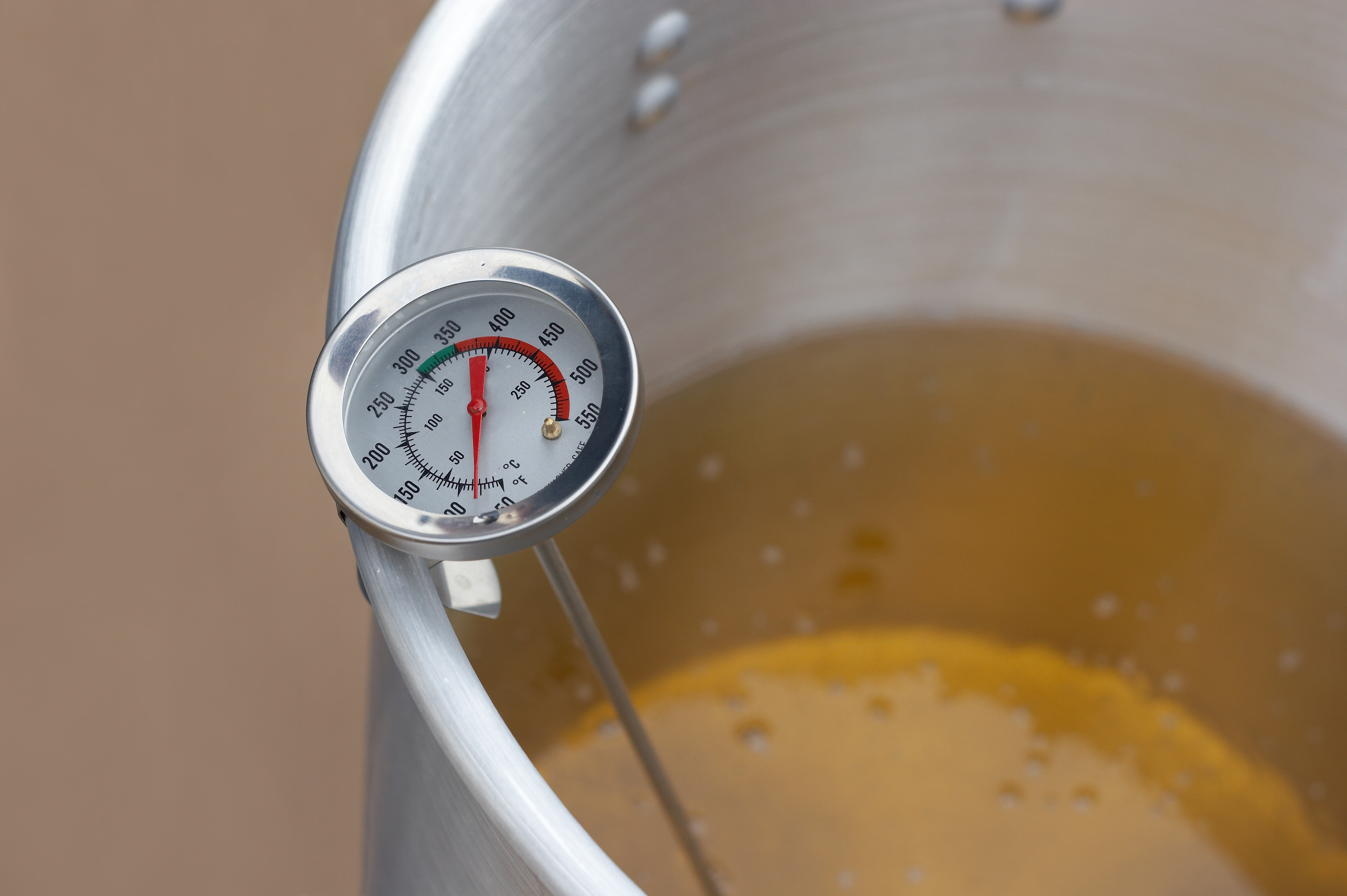
Turkey FryerPropane turkey fryers have the ability to turn into a fountain of fire, causing fire damage to homes and injuries to people. The holiday season is supposed to be about family, friends, and food. With all the fun to be had at holiday parties there is also the chance that property can be damaged or that a homeowner could be held liable for injuries. The damage or injuries can even happen before the turkey is cooked. In fact, the turkey and the turkey fryer can turn a fun holiday party into a disaster.

The National Fire Protection Association’s 2013 survey revealed that on Thanksgiving the total number of daily fires is estimated to be 230% above the daily average, and on Christmas Day it is 58% above the daily average. Propane turkey fryers have developed a reputation for being dangerous. You can find hundreds of videos on the internet showing the chaos that one little bird and some oil can cause. Nationally Thanksgiving Day cooking annually causes 2,000 residential fires totaling to about five deaths, 21 injuries, and $21 million in property losses. Turkey fryers alone make up about $15 million of the property damage caused by Thanksgiving Day cooking.

It is easy to see how these numbers come about. With people buzzing around, friends and family catching up and telling stories, it is easy to make a mistake that can lead to a fire while cooking. If you add an open flame and gallons of hot oil to the mix, you very likely have a recipe for disaster.

The blame is not always the chef’s, but instead might fit squarely on the shoulders of the manufacturer. Manufacturer’s products liability can be a likely cause of a turkey fryer causing damage to homes and people. If there is a defect in the design of the fryer, or there is a defect in the manufacturing the fryer that caused the fire, the manufacturer could be on the hook for the loss. As such, subrogation recovery potentials need to be evaluated relatively early in order to gather proper evidence and avoid spoliation. Engaging a competent Oklahoma law firm quickly in fire losses benefits greatly. Oklahoma attorneys knowledgeable in fire investigation and preservation of evidence necessary for recovery against the manufacturer greatly increase your odds.

Earthquake insurance is not automatically included in a standard homeowners policy. However, insurance companies may provide coverage for earthquakes for an additional charge. Earthquake coverage may be purchased as either an endorsement to a homeowners insurance policy or it may be purchased as a separate policy of its own. Over the past few years earthquake coverage has become more relevant in Oklahoma. Since the 5.6 magnitude earthquake of 2011 the number of Oklahomans with earthquake insurance has increased from 2 percent to about 15 percent, surpassing California’s 10 percent. This increase in earthquake coverage is most likely related to the increase in earthquakes that Oklahoma has witnessed over the past few years. One question presently under discussion is whether “earthquake insurance” includes man-made situations such as waste water disposal or injection wells.

The fact of the matter is, Oklahoma earthquakes are being blamed on waste water disposal wells, or injection wells. Geologists believe that the injection well sites are causing seismic movement leading to earthquakes; however, this is not a 100 percent scientific fact. Many earthquake coverage policies or endorsements will specifically exclude man-made earthquakes. Therefore, insurance companies might exclude earthquakes if caused by injection wells if the scientific and legal community view the earthquakes as caused by the injection wells.

Some insurance companies are already taking the stance that the recent Oklahoma earthquakes are man-made and therefore excluded. In 2014, roughly 100 insurance claims due to earthquakes were made, however, only eight of those claims were paid. In light of this situation, Oklahoma Insurance Commissioner John Doak released a bulletin stating that insurance companies cannot deny earthquake claims based on the “unsettled belief these earthquakes were the result of fracking or injection well activity.” Commissioner Doak further stated that if insurance companies were denying claims on the reasoning that injection wells are the cause, the Insurance Department might take appropriate action. Commissioner Doak also felt that until there is legal precedent to the contrary the earthquakes are to be presumed natural earthquakes.

The denial of some of these claims may be attributed to other situations, such as preexisting conditions or the damages sustained to the home do not meet the deductible threshold. Earthquake insurance is designed to cover a total loss on the home. A number of earthquake policies will have deductibles ranging from 5 to 10 percent of the property value. Therefore, when the damage caused by an earthquake does not break the threshold of the deductible the insurance company is not going to pay on the claim.

Whether Oklahoma earthquakes are assumed natural or man-made is going to be answered by the courts. Specific questions about whether the insurance policy has earthquake coverage requires review by a competent Oklahoma attorney. However, Oklahoma may have an answer on one case soon. It is a pressing concern with great interest by Oklahoma homeowners and insurers alike. Perhaps there will be a definitive answer in the near future, but regardless of the outcome, Oklahoma earthquakes have devastated homeowners.


Fires caused by candles result in $390 Million in claims for property loss or damage. It is estimated there are 165 fatalities each year from burning candles. Retail candle sales are increasing every year with a 700% increase in the past 10 years. Women are more likely to be killed or injured in residential candle fires than are men. Upon reading manufacturer surveys, the greater number of injuries to women is no surprise, 95 percent of all candle buyers are female. More candle fires occur during December than any other month with 24 percent of all candle fires taking place in December and January.

Adjusters investigating residential candle fires should be alert to two concerns: (1) arson and (2) subrogation. As every smart arsonist knows, making an intentional fire look “accidental” is a sure way to get paid. For fires that are truly accidental rather than intentional, third-party recovery should not be overlooked. There have been a number of consumer product recalls for candles that posed a fire or burn hazard.

 Fire loss claims are best adjusted from a team approach with an experienced field adjuster, cause and origin expert, and a seasoned Oklahoma insurance attorney.

Arson defenses and subrogation recovery potentials need to be evaluated early in the context of the available evidence and spoliation issues. Engaging an Oklahoma law firm immediately following a reported fire claim can mean all the difference.

There is some disagreement between the courts in the way they are interpreting and applying the MCS-90 Endorsement and its relationship to the underlying insurance policy.

The majority of jurisdictions consider the insurer’s obligations under the MCS-90 endorsement to be that of a surety and not a modification of the insurance policy. Under the majority view, the insurer’s duty to pay a judgment under the MCS-90 endorsement arises from the endorsement’s specific language which guarantees a source of recovery to an injured party, rather than from an insurance obligation.

Courts who follow this approach have found that the obligation of an insurer to pay under MCS-90 is triggered only when (1) the underlying insurance policy, to which the endorsement is attached, does not otherwise provide coverage and (2) no other insurer is available to satisfy the judgment or the insurance coverage is insufficient to satisfy the federally prescribed minimum levels of financial responsibility.

Under this case law, the MSC-90 endorsement is also only implicated as between an injured member of the public and the insurer. It does not alter the relationship between the insurer and the insured carrier. It also gives the injured person the right to demand payment directly from the insurance company as well as gives the insurer the right to demand reimbursement from the insured carrier. The Tenth Circuit, which includes Oklahoma, has adopted this majority view. See Carolina Cas. Ins. Co. v. Yeates, 584 F.3d 868 (10th Cir. 2009).

The minority view, on the other hand, is that the MCS-90 endorsement indirectly modifies the insurance policy essentially extending the insurance benefits. Under this view, each policy is viewed independently as the endorsements are found to only negate limiting provisions in the policy to which it is attached and does not establish primary liability over other policies. The Tenth Circuit in Carolina Casualty, supra, recognized that under this approach “an insurer may be forced to indemnify the motor carrier for its negligence to a greater extent than it bargained for and without a right to reimbursement from another primary insurer.”

As the law continues to remain in a state of flux, it is a good idea to consult with an attorney with experience and training in cargo losses, damaged cargo, and insurance coverage when adjusting a loss that occurs in transit. Some issues in Oklahoma may need to be analyzed under Oklahoma law for contractual agreements between the brokers, haulers, warehouses, etc. Indemnification can be a contractual commitment separate from Carmack. These agreements to indemnify may or may not be covered by insurance.

Plaintiff filed a lawsuit against her automobile insurance carrier, Granite Insurance Company (“Granite”), for breach of contract and bad faith in investigating her insurance claim. Plaintiff also named as a Defendant American International Group (“AIG”), the holding company for Granite. Granite is one of AIG’s subsidiaries. There was no question in this case that the Oklahoma court had jurisdiction to hear the case against Granite. However, AIG filed a motion to dismiss, asserting that the Oklahoma court could not exercise personal jurisdiction over it because it lacked the necessary minimum contacts with Oklahoma to satisfy due process.

AIG presented evidence that it: 1) is a Delaware corporation having its principal place of business in New York; 2) is not licensed to do business in Oklahoma; 3) does not maintain an office or property in Oklahoma; and 4) does not sell, write, or issue insurance policies in the state of Oklahoma. Plaintiff did not dispute the facts submitted by AIG. Instead, Plaintiff argued that, since Granite was a subsidiary of AIG and Granite had sufficient contacts with Oklahoma, those contacts should be imputed to AIG. The Plaintiff argued that AIG exercised control over Granite and therefore, Granite’s contact with Oklahoma should be sufficient to establish jurisdiction over AIG.

 The United States District Court for the Western District of Oklahoma granted AIG’s motion to dismiss, holding: 1) companies conducting business through their subsidiaries can qualify as transacting business in a state; however, to do so, the parent must exercise sufficient control over the subsidiary; 2) the evidence before the court in this case did not demonstrate the pervasive level of control required to permit the exercise of personal jurisdiction over AIG in Oklahoma.

The obvious advantage to AIG in the court’s ruling is that it was not forced to defend an insurance coverage dispute. Competent Oklahoma insurance attorneys attempt to eliminate the expense involved in litigation of insurance policies and allegations of “bad faith”.

 Harris v American International Group. Inc., et al., 923 F.Supp. 2d 1299 (W.D. Okla. 2013).

Congress passed the Motor Carrier Act of 1980 (MCA) with the intention of overhauling "outdated and archaic regulatory mechanisms, while retaining the pluses of an industry that has worked by simply conducting itself under the ‘rules of the game.’ " Carolina Cas. Ins. Co. v. Yeates, 584 F.3d 868 (10th Cir. 2009) citing H.R. Rep. No. 96-1069, at 2.

After the passage of the MCA, however, legislators feared that the reduction of regulatory barriers for interstate motor carriers would result in increased safety concerns. One concern the MCA set out to address was abuse by motor carriers who borrowed or leased vehicles to avoid financial responsibility for accidents which occurred during the interstate transportation of goods.

In response, the MCA and other subsequent regulations promulgated by the Federal Motor Carrier Safety Administration (FMCSA) require interstate motor carriers to either maintain insurance or another form of surety "conditioned to pay any final judgment recovered against such motor carrier for bodily injuries to or death of any person resulting from the negligent operation, maintenance, or use of motor vehicles under the carrier’s permit." Carolina Cas. Ins. Co., supra. In particular, the MCA requires that a motor carrier may operate only if it is registered to do so and is willing to comply with certain "minimum financial responsibility guidelines". A carrier can establish proof of financial responsibility by one of three ways: (1) an MCS-90 endorsement, (2) a surety bond, or (3) self insurance.

As opposed to a surety bond or self-insurance, the MCS-90 endorsement states that the insurer agrees to pay, "within the limits of liability described herein, any final judgment recovered against the insured for public liability resulting from negligence in the operation, maintenance or use of motor vehicles subject to financial responsibility requirements of sections 29 and 30 of the Motor Carrier Act of 1980 regardless of whether or not each motor vehicle is described in the policy and whether or not such negligence occurs on any route or in any territory authorized to be served by the insured or elsewhere. . ."

The Courts vary in their interpretation and application of the MCS-90 endorsement and its interplay with the liability insurance policy. We will discuss these different interpretations in a subsequent post.

The full text of Carolina Cas. Ins. Co. v. Yeates, can be found at 584 F.3d 868 (10th Cir. 2009).